
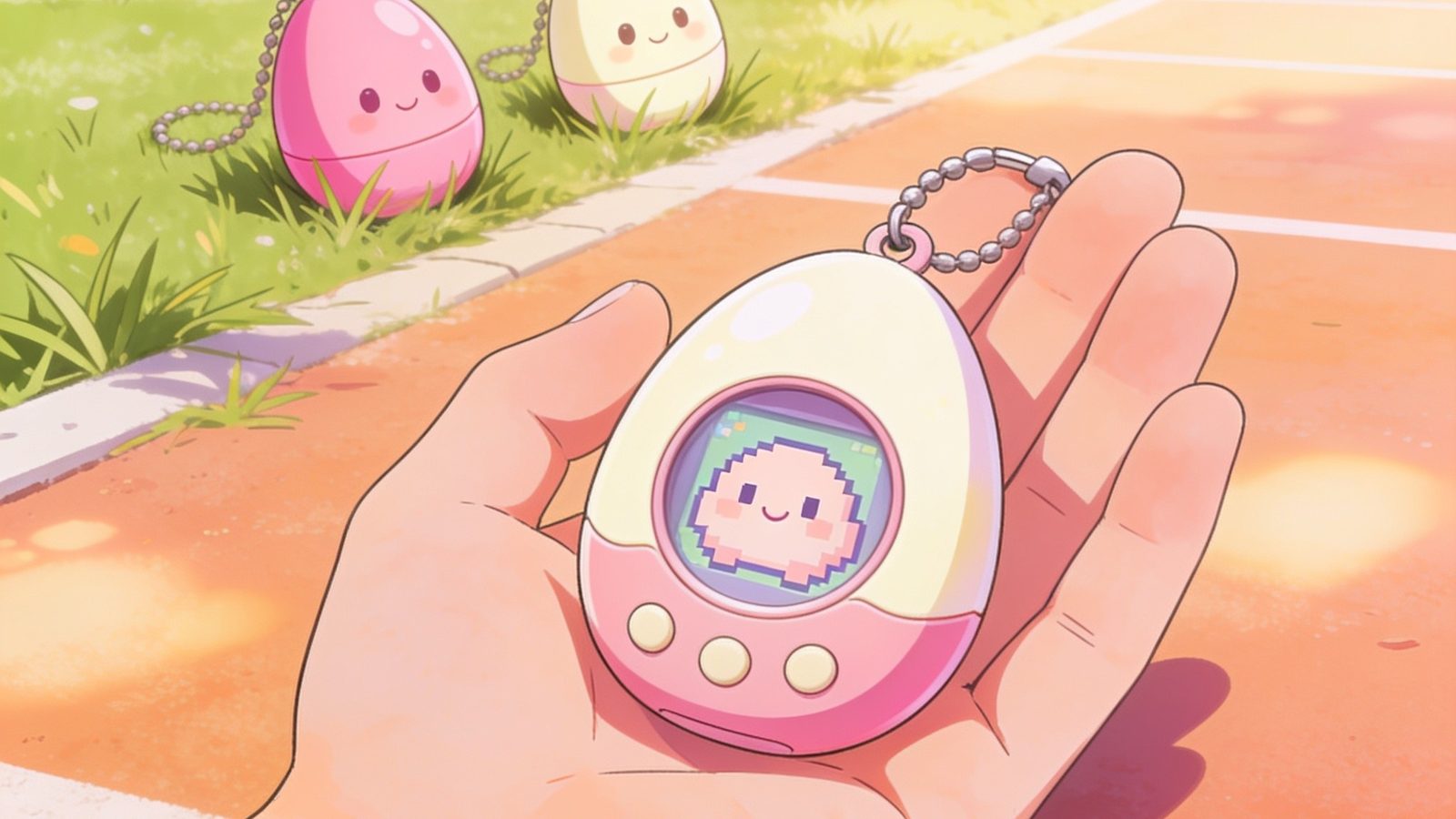
There was a stretch of time, roughly 1997 to 1998, when almost every kid on the planet seemed to be carrying an egg. Not a real one. A plastic one, on a keychain, with a tiny black-and-white screen and three buttons, and blinking pixel eyes that made it look back at you like it knew you.
The Tamagotchi had actually launched in Japan on November 23, 1996. But the craze we remember wasn't the launch. It was what happened next, when the little machines crossed the ocean, hit the US in 1997, and turned into the defining schoolyard currency of two years.
The original was a spare, low-tech thing: an egg-shaped shell in pastel plastic, a monochrome LCD, three buttons. That was the whole toy. A creature that hatched, needed feeding, needed cleaning, and quietly grew up on your palm. It had no graphics to speak of, no sound beyond a beep, no story mode. None of that mattered. The magic was in the attachment.
Kids genuinely fell for their pixel pets. You didn't just win with a Tamagotchi — you cared for it. Feeding it and cleaning up after it made it yours. There was a competitive edge to it too: kids compared who had raised theirs longest, who kept theirs alive through the night, who had the rare evolution. A Tamagotchi alive and well in month two was a small trophy. One that died was a small tragedy. The death beep was a soundtrack of the era, and it produced its own folklore — the backyard burial, the shoe-box casket, the tiny ofrenda of grass and pebbles. Plenty of kids cried real tears over a handful of pixels.
Adults noticed, and not always happily. Schools in several countries banned them outright. The logic was honest: kids couldn't stop checking their pets during class. Beeps went off mid-lesson, feedings happened under the desk, and creatures got confiscated by the handful. The ban only made the toys more precious, the way all forbidden things are.
Scarcity did the rest. Shipments sold out, the toys became genuinely hard to find, and a whole informal resale and trading scene sprang up on the playground. Kids bartered, haggled, and swapped colors the way a later generation would trade cards. By November 1997 the Swedish Retail Institute had named the Tamagotchi Christmas Gift of the Year, and worldwide sales across the classic-era models climbed to roughly 80 million units.
Eighty million is a number. What sticks, twenty-odd years later, is the shared memory: the low battery chirp on the walk home from school, the collective gasp when somebody's pet blinked out, and the strange quiet pride of having kept one alive long enough to see it grow. For about two years, being a kid meant carrying an egg, and caring about it far more than the plastic deserved. And that, more than any sales figure, is why we still write about it.
For more of our own digital-pet history and where the fad's spirit lives on, it pairs well with the archive over at hermesnews.fdhcl.com. Here at TamaBuddy, meanwhile, we're keeping the keepers alive — one pixel critter at a time.