
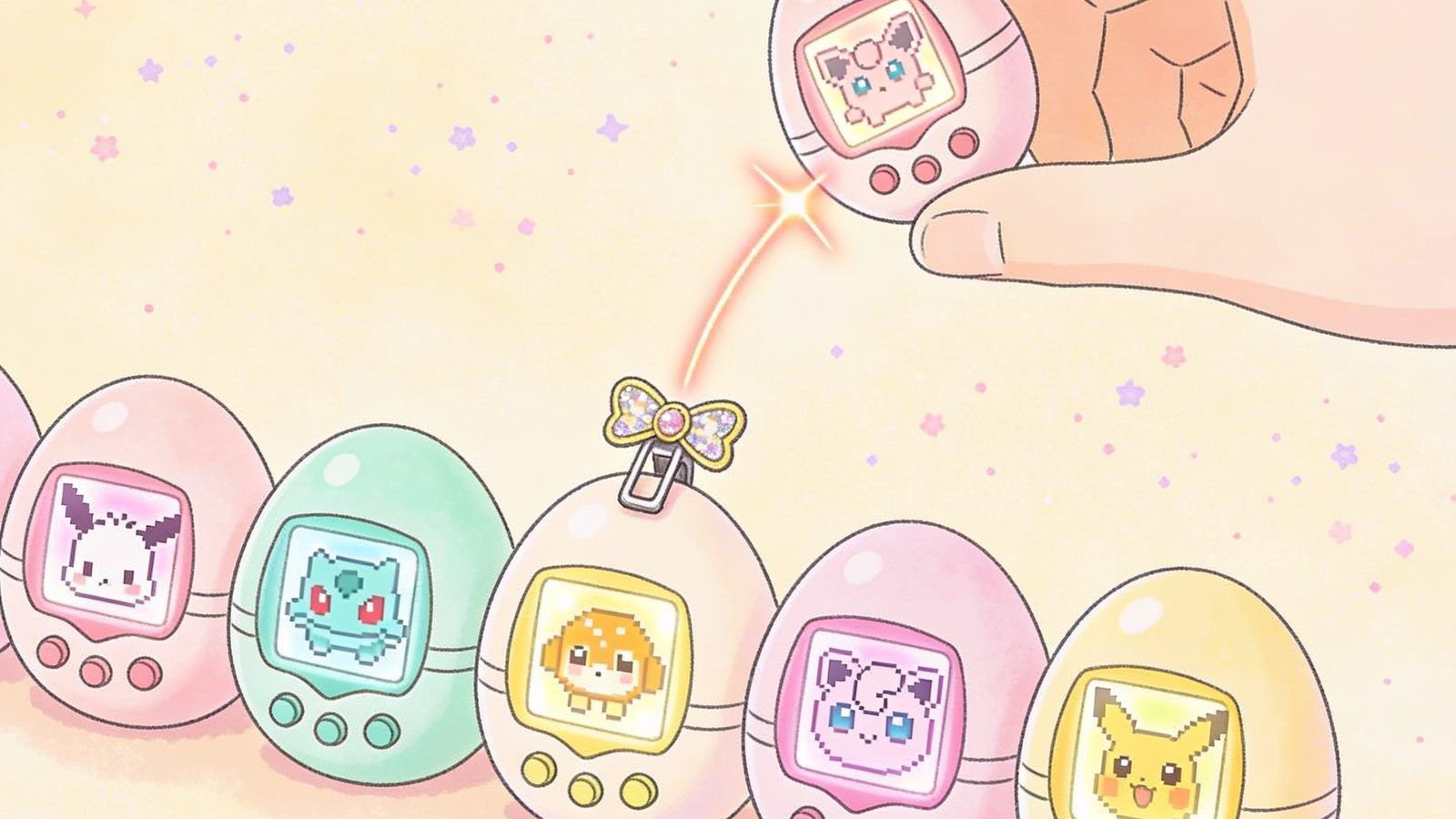
For most of the 2010s, if you lived outside Japan, Tamagotchi seemed to have quietly slipped away. No shelves, no ads, no new boxes at retail. The little egg most people remembered from the late 90s had gone somewhere else and was doing something nobody outside a niche was watching.
That read of the decade is half right. It did vanish from the West. But it certainly wasn't idle. It had turned into a colour experiment running years ahead of the rest of the market, and almost none of it was translated.
The pivot started in 2009 with the Tamagotchi iD. It was one of the first colour models, and it was the first to ship downloadable content. You could pull in new items, accessories, wallpapers, and games through an infrared link from a phone, all pushed over from a website. That download model feels obvious now. In 2009 it was genuinely ahead of its time, and it was Japan only.
The iD L refined that idea around 2010 and 2011, adding the ability to swap items between two units. Two people within infrared range could trade things their eggs had earned. That small social touch mattered more than it sounds.
Then came the Tamagotchi P's, launched on the anniversary of the franchise's 16th birthday on November 23, 2012. Its big addition was the Deco Pierce: small swappable jewel pins you clipped onto the device. Each pin unlocked a different set of characters, games, food, and clothing, and they spawned a whole physical accessory culture around collecting and trading the pins themselves. A virtual pet with its own accessory line, years before modern Tamagotchi leaned hard into collectibles.
The 2014 Tamagotchi 4U went further in a different direction, trying NFC linking to an Android companion app. That experiment stalled, but the intent is the story: a plastic pet trying to reach into the smartphone world.
Through all of this, the West got almost nothing. Collectors imported units from Japan and waited. English-speaking fans depended on fan-made patches to make the games readable, because an official localisation never came for most of these models.
What sticks with me is the 15th-anniversary iD L version from 2011. Bandai ran a fan poll to pick which characters returned, and 32 made the cut, including faces that went all the way back to the original 1990s eggs. Nostalgia for the very first Tamagotchi was already there, straight from the fans, in a generation most outsiders assumed had moved on.
Look at the modern lineup and the thread is hard to miss. The Smart, the Pix, the Uni, the full colour comeback from 2021 onward, they all run on ideas this supposedly quiet decade built first. The downloadable content model. The collectible accessories. The colour screen. The comeback to the West was loud, but the groundwork was laid in Japanese during the years the rest of the world was looking the other way.
A niche decade kept a lineage alive when few people were paying attention. Sometimes that's exactly when the interesting work gets done. For deeper fan-built Tamagotchi history and related collections, we keep notes over at Stack Signal.